Lackford Lakes is a twice designated SSSI Suffolk Wildlife Trust nature reserve situated in West Suffolk just north of Bury St Edmunds. It has 11 lakes with 9 hides and spans over 360 acres of ex-gravel extraction works. The reserve has a visitor centre that is open Tuesday - Sunday and Bank Holidays.
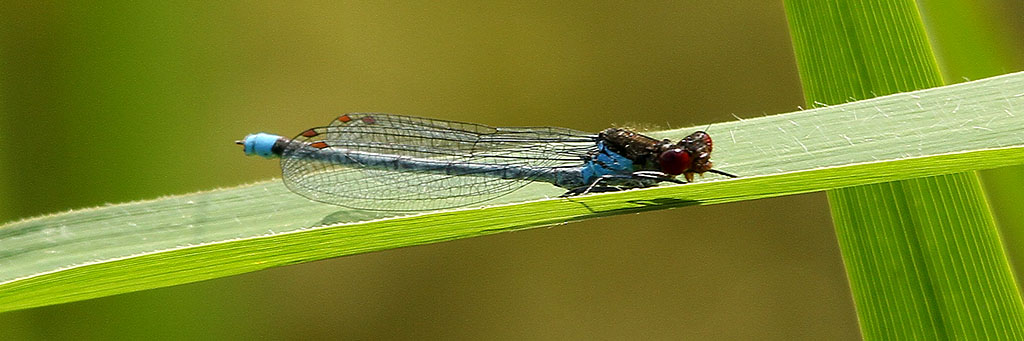
With the warm weather still apon us there is no let up on the dragonflies and insects on the wing. With this late summer warmth its introduced anoticeable increase of migrant hawker dragonflies along with ruddy & common darter and brown hawker.
A willow emerald damselfly is new for the year near Bess’s hide.
The first grayling of the year was seen last weekend and a purple hairstreak has beenreported recently. Along with good numbers of brown argus, common blue, peacock, red admiral, comma and painted lady butterflies, the reserve total is now at 25 species for the year.
Plently of Birds on the reserve
The birds on the reserve are stable with common sandpiper & green sandpiper and common terns as our main visitors along with our first ever black-tailed godwit this was spotted out on the Slough
Recently an osprey has been spotted over Lackford and is now being seen more often, please keep a look out for this beautiful bird as it migrates south. Also we have had a wheatear spotted on site.
The kingfishers are still putting on a beautiful show at (slough & eastern lakes) so why not pop down and see these beautiful birds. Kingfishers are a small and unmistakable bright blue and orange bird, that fly rapidly, low over the water and hunt fish from riverside perches. They will occasionally hover above the water's surface before diving for their food.
This week some of our volunteers were out and about checking our nest boxes after this years broods and came across a tree sparrow nest. We beleive that this maybe the first time they are nested at Lackford and we very much hope that we will return next year.
Smaller than house sparrow, they have a chestnut brown head and white cheeks and collar with a black cheek spot.
This Saturday 3rd September we have our family bat walk, we will leave the visitor centre at 8pm and return at 10pm. Please bring a torch with you but bat dectors will be used.
On Saturday 10th September we have our Naturally Art event. From 10 am to 12pm Art activities will be undertaken with the inspiration of the wild
Dont forget to check out our website for all our events: Lackford Lakes We look forward to seeing you soon.
Well the weekend and this week so far have been one minute sunshine and then the next rain, but it has not stopped the wildlife here at Lackford Lakes.
Fledging birds have been seen all over the reserve despite the terrible weather. Blue tits, treecreepers, long-tailed tits and blackcaps are being spotted all over. The kingfishers have been visible around the Hawker Pool. The parents have been seen carrying large fish to the nest bank so please keep your eyes open for fledging Kingfishers!
Last weekend a spotted flycatcher was seen for the second time at Lackford feeding over the centre pool. It is often perched on the edge of the branches and will dart in and out to catch its dinner. If you do see this amazing bird please let us know in the visitor centre!
Damselflies and dragonflies are being seen all over Lackford. Look out for their striking colours and the beating of the wings flying past you.
Sadly our dragonfly & damselfly identification on 25th June is now FULLY BOOKED. But... do not fear, every Saturday throughout June at 1pm we will be doing Discover the moths of Lackford.
There is no need to book but be ready at the visitor centre just before 1pm.
The above video was taken at lackford two weekends ago and shows some of the species that are around at the moment.
Over the last few days our bee orchards have been flowering. We have at least 3 in bloom at the moment with many more preparing to burst into colour in the coming weeks.
One other event that has taken place this week is the appearance of a good range of butterfly species:brown argus, speckled wood, green veined white, red admiral and holly blue but on the top of the list is the painted lady making its appearance for the first time.
Yes, spring already we hear you cry. It only seemed like last week when we were getting over new year and now we have our first sping arrival in the shape of a chiff chaff, which has been seen and heard chiff chaff-ing away along the path between the visitor centre and Bernard's hide. Another spring visitor that's also been seen and heard is a blackcap on the sailing lake path near the bench. Dunnocks can be seen around the reserve singing from the calling posts. This spring activity comes just in time for our spring activities here at Lackford.
We've got lots happening here at Lackford this spring starting with our Spring safari activity dayon the 31st March where we will be looking for wildlife in the streams, lakes, ponds and woods of Lackford Lakes.
On the 1st of April, we have Family Friday where you can explore the reserve to see how many springtime challenges you can complete.
Our regular Naturally Art workshop is on the 2nd April as well as our wildlife weekend the Sounds of Spring, which runs throughout the weekend. This is the time of year when the air is filled with the sounds of birds calling for a mate. How many different species will you hear? Are birds the only thing you'll hear? On the Sunday, you can take a Wildlife Wander with the guides on a tour of the reserve and see some of the wildlife that lives at Lackford and how they are getting ready for spring.
At the end of the week on the 8th April, we have Young wardens who will be sharpening the conservation skills by working on the reserve.
There's always plenty happening at Lackford, don't forget to check out our forthcoming events list on the right of this page, or click on the link at the top.
Another first for Lackford!
Yes, another species has been recorded for the first time at Lackford in the shape of a raven, two in fact. The were spotted deep in combat with a pair of red kites over the sheep fields by several people and thankfully, captured on camera by our regular visitor and contributor Ian Goodall.
This just goes to show that even when the weather is overcast, raining or dreary, that the action doesn't cease. A big thank you to Ian for allowing us to use these photos.
Another unusual capture.
This weekend saw the kingfishers displaying well around the reserve, especially at the false bank at Hawker Pool.
Yes, the male kingfisher managed to catch and eat this great crested newt at Bernard's pool, which just goes to show that the lakes don't just have fish and crayfish in them, there's newts too. Thank you Alan for sharing.
It doesn't stop there, yes, there's more. Barry Woodhouse, another regular contributor managed to get a photo of this very shy individual also at Bernard's hide.
Water rail are more often heard than seen with their screaming call being emitted from the reed beds, but of late, several have been showing well sneaking out of cover.
Elsewhere on the reserve, everything has been getting busy as spring finally gets under way. Our Visitor officer even caught this black-headed gull trying to chase off a mute swan, which in turn was seeing off a canada goose.
So as we've seen, it doesn't have to be all blue skies and sunshine for you to see lots at Lackford, there are things happening all the time, so don't miss out!
Sightings
Red-crested pochard are still being seen mainly from Steggall's hide on Wilson's Flood near the pontoon. Shelduck have grown in number and we now have about a dozen that can be seen on The Sloughalong with oystercatchers, redshank, teal, shoveler and the odd kingfisher and snipe.
Snipe have also been showing very well at Bernard's hide, with the occasional jack snipe turning up from time to time. As seen above, water rail are also being spotted here too.
In Ash Carr, nuthatch, siskin, grey wagtail, goldcrest, great spotted woodpeckers, marsh tit, coal tit and treecreepers are regularly being spotted. Plenty of wrens are also being seen around the reserve too.
Barn owl has been spotted on some evenings from the Double-decker hide. Buzzards are a regular spot over the reserve and red kite are also getting seen more. In the fields next to Ash Carr, look out for a pair of kestrels often seen perched in the lone tree.
Kestrel pair in Ash Carr field
Also in the field this weekend, 70+ redwing were spotted feeding up getting ready for the long flight north.
Don't forget, soon the spring migrants will be arriving at Lackford and we want your sightings. So if you think you've seen a new arrival, please pop into the centre and let us know.
Well a big happy New Year to everyone and we hope the holiday period went well for all of you and your families. The New Year here at Lackford got off to a wonderful start with the centre being open on New Years day, and the turn out to Paul's New Year's Day Bird Walk saw many people in attendance. this helped get our Year's Bird list off to a fine start with 62 species of bird being spotted on the first day. You may remember, we ended 2015 with 136 species of bird seen at Lackford and already on the first day, we're almost halfway there.
The bird list at the end of New Year's Day. We know it say's 60, two were not reported till later, which
were Common Gull and Magpie.
Currently, the list now stands at 75 with a new bird for Lackford being added last week. Over the last weekend, there were several reports of a great northern diver on a lake not too far from Lackford. However, on Tuesday it disappeared, only to turn up on our Sailing Lake. Big thanks to our resident birder Paul Holness for spotting it. Regular visitor to the lakes and photo contributor to the blog Ian Goodall, managed to get these cracking shots. Thanks Ian.
Great Northern Diver on the Sailing lake by Ian Goodall
It only stayed for a short while before flying off in an easterly direction. We hoped that it would land on the east lakes and join our Long-tailed duck, who is still showing well on Hawker pool and Long Reach, but alas, it wasn't so.
A little bit of work
Many of the visitors to Lackford may have noticed we've been having a bit of work done on The Slough. Thanks to an anonymous donation, we are re-profiling The Slough in an effort to bring the wildlife closer to the hides. The work will involve making some new spits of land closer in, creating a shallows and removing some small amount of reed-bed.
The view from Reed hide
As you can imagine, the wildlife that usually frequents The Slough has decided to move to the East Lakes part of the reserve with many of the teal, gadwall, shoveller and others being found on Mill Deep and can be seen from Fullers Mill hide.
The major work started just before Xmas and should be completed towards the end of the month. There will also be some revamping and moving of the hides and we will keep you posted as to what and when this is happening.
The new shallows being created.
Yet, come the evening when the work has stopped, the goosanders still come in to roost on The Slough and whilst some of these photos were being taken, a kingfisher flew by. So it hasn't put off the wildlife that much and not before long, everything will be back to normal and hopefully even better than before.
Wildlife rescue
Just before Xmas, our resident birder Paul Holness found an injured male kestrel on the reserve. Despite there being no obvious injuries, the bird could not fly and so we contacted Phoenix Bird of Prey Rescuewho came and collected the bird. Their vet found no injuries either and it was most likely suffering some bruising. A couple of weeks of rest saw the bird return to full health and then returned to Lackford for release back to where it was found.
Paul with the kestrel shortly before release. Thanks to Jo Daffin.
A new booking system
We have a new online booking system in place for all events and activities at Lackford. All events are now bookable through the Trust's What's On page, or by clicking on the link to the right of this page in our 'Forthcoming events' section. For those of you who do not have internet access, you can book up by calling our head office on 01473 890089. We can no longer accept bookings at Lackford as we previously did, sorry.
It's not just photos!
Lackford is often frequented by photographers getting snapshots of our wildlife. But this week Richard Thewlis posted some of his lovely paintings of the Lackford wildlife on his Twitter account (@RThewlis) and has agreed to share them here, thank you Richard. I think you will agree, they are lovely paintings.
Teal by Richard Thewlis
Lapwing by Richard Thewlis
According to Richard, these were "Mad rush paint sketches". It would take me an age to paint something like this and still wouldn't be anywhere near as good as these paintings.
Sightings
Well, as previously stated, the long-tailed duck is still present on the reserve and can usually be found on either Hawker Pool or Long Reach, it's always best to pop in to the visitor centre to find out it's latest location on the day.
Siskin and redpoll have been seen altogether in large flocks around the visitor centre. Bullfinches have also been seen in their glorious winter colours around the visitor centre and the car park. Grey wagtail has been spotted on several occasions on the overflow car park and in Ash Carr near Hawker Pool. Goldcrests have also been a common sight at several places around the reserve, but especially in Ash Carr. Here you can also find some siskin flocks, marsh tit, nuthatch and treecreeper.
On the lakes, we have plenty of goldeneye, tufted duck, teal, pochard and wigeon in attendance. Little grebe can often be seen from Fullers Mill hide and little egret from Bess'. Kingfisher has also been showing well at Bess', Atlas and Steggall's as well as at the visitor centre. Here a jay has become a regular visitor to the feeder cam.
Great spotted woodpecker can also be seen visiting the nut feeder at the centre too. The gull roost on the sailing lake is still quite a sight to see, with over 10,000 birds coming in to roost every night. For those who like a challenge, there are still the odd rarity to be found amongst them such as yellow-legged gull. What else will be found and can be added to our ever increasing list?
Don't forget, no matter how insignificant you think your sighting is, please let the vitiator team know, you may add a bird to our species list that hasn't been recorded yet!