Lackford Lakes is a twice designated SSSI Suffolk Wildlife Trust nature reserve situated in West Suffolk just north of Bury St Edmunds. It has 11 lakes with 9 hides and spans over 360 acres of ex-gravel extraction works. The reserve has a visitor centre that is open Tuesday - Sunday and Bank Holidays.
Well the sun is out and lets hope its here to stay. Over the last week the temperature has been rising and providing us with more opportunities to see amazing insects on the wing.
With the increase of temperature we are currently at 11 species of dragonfly and 17 species of butterfly.
Butterflies and dragonflies continue to impress our visitors at the reserve. Various brown butterflies and skippers are present in good numbers along with favourites such as ringlet, speckled wood and green veined white. Not new to the list but making a reappearance is red-eyed damselfly and the larger hawker dragonflies. With the clear blue skies ans warm weather why not pop along to the reserve.
Our kingfishers are doing well with another brood due
to fledge in the next few weeks while birds from the first family are
being seen regularly. The Double Decker hide and Hawker Pool sites are
still the best with regular sightings at the visitor centre pool as well.
Over the last few weeks wading birds have been seen more and move over on The Slough. green sandpipers and a common sandpiper areregulars along with the occasional little ringed plover putting in a brief appearance. Please let us know if you spot any other birds to the centre.
The summer holidays have started so why not visit Lackford Lakes and get reconnected with nature. There is plently happening from organised events to daily activities (details can be found on our website) Lackford Lakes, or click on one of the links found on the right of this page to find out about the many activities we have on offer.
We have organised events throughout August, please book online www.suffolkwildlifetrust.org - full details are on the website but here is a slice of what we have to offer.
Family Fridays - every Friday 2 - 4pm
Wednesday Family mornings - 3rd & 17th August
Activity mornings for 4-7 year olds Tuesday 9th & Tuesday 23rd August @ 10.30am - 12.30pm
Activity days for 8-12 year olds Thursday 11th & Thursday 18th August @10.30am - 2.30pm
Dont forget we have our daily activities in the summer, where you can get a spotter sheet and go looking for insects and wildlife. Or why not borrow one of our bug hunting kits and see what you can find.
Special Events not to be missed.
Beautiful butterflies weekend. Saturday 6th & Sunday 7th August - During this weekend there will be wildlife guides present to help you spot those butterflies.
On Sunday 7th August there will also be a special butterfly themed wildlife wander, where visitors can join a guide to go looking for these butterflies.
Changes on the way.
In the coming months we will be making improvements to the Kingfisher trail to improve your experience at the reserve. Currently we are also working on two spots - building a bigger hide overlooking the Slough where the old reed hide used to be. This will become Bernard's hide and will offer you closer views across the Slough to look for those waders. We are also building a platform not far from the centre that will overlook Bernard's pool. Allowing you the perfect location to watch dragonflies and butterflies.
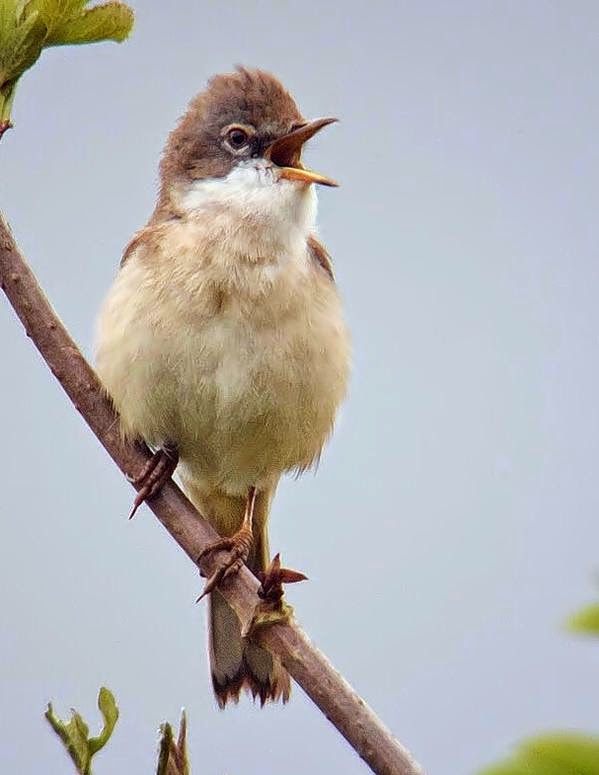
Yes, spring already we hear you cry. It only seemed like last week when we were getting over new year and now we have our first sping arrival in the shape of a chiff chaff, which has been seen and heard chiff chaff-ing away along the path between the visitor centre and Bernard's hide. Another spring visitor that's also been seen and heard is a blackcap on the sailing lake path near the bench. Dunnocks can be seen around the reserve singing from the calling posts. This spring activity comes just in time for our spring activities here at Lackford.
We've got lots happening here at Lackford this spring starting with our Spring safari activity dayon the 31st March where we will be looking for wildlife in the streams, lakes, ponds and woods of Lackford Lakes.
On the 1st of April, we have Family Friday where you can explore the reserve to see how many springtime challenges you can complete.
Our regular Naturally Art workshop is on the 2nd April as well as our wildlife weekend the Sounds of Spring, which runs throughout the weekend. This is the time of year when the air is filled with the sounds of birds calling for a mate. How many different species will you hear? Are birds the only thing you'll hear? On the Sunday, you can take a Wildlife Wander with the guides on a tour of the reserve and see some of the wildlife that lives at Lackford and how they are getting ready for spring.
At the end of the week on the 8th April, we have Young wardens who will be sharpening the conservation skills by working on the reserve.
There's always plenty happening at Lackford, don't forget to check out our forthcoming events list on the right of this page, or click on the link at the top.
Another first for Lackford!
Yes, another species has been recorded for the first time at Lackford in the shape of a raven, two in fact. The were spotted deep in combat with a pair of red kites over the sheep fields by several people and thankfully, captured on camera by our regular visitor and contributor Ian Goodall.
This just goes to show that even when the weather is overcast, raining or dreary, that the action doesn't cease. A big thank you to Ian for allowing us to use these photos.
Another unusual capture.
This weekend saw the kingfishers displaying well around the reserve, especially at the false bank at Hawker Pool.
Yes, the male kingfisher managed to catch and eat this great crested newt at Bernard's pool, which just goes to show that the lakes don't just have fish and crayfish in them, there's newts too. Thank you Alan for sharing.
It doesn't stop there, yes, there's more. Barry Woodhouse, another regular contributor managed to get a photo of this very shy individual also at Bernard's hide.
Water rail are more often heard than seen with their screaming call being emitted from the reed beds, but of late, several have been showing well sneaking out of cover.
Elsewhere on the reserve, everything has been getting busy as spring finally gets under way. Our Visitor officer even caught this black-headed gull trying to chase off a mute swan, which in turn was seeing off a canada goose.
So as we've seen, it doesn't have to be all blue skies and sunshine for you to see lots at Lackford, there are things happening all the time, so don't miss out!
Sightings
Red-crested pochard are still being seen mainly from Steggall's hide on Wilson's Flood near the pontoon. Shelduck have grown in number and we now have about a dozen that can be seen on The Sloughalong with oystercatchers, redshank, teal, shoveler and the odd kingfisher and snipe.
Snipe have also been showing very well at Bernard's hide, with the occasional jack snipe turning up from time to time. As seen above, water rail are also being spotted here too.
In Ash Carr, nuthatch, siskin, grey wagtail, goldcrest, great spotted woodpeckers, marsh tit, coal tit and treecreepers are regularly being spotted. Plenty of wrens are also being seen around the reserve too.
Barn owl has been spotted on some evenings from the Double-decker hide. Buzzards are a regular spot over the reserve and red kite are also getting seen more. In the fields next to Ash Carr, look out for a pair of kestrels often seen perched in the lone tree.
Kestrel pair in Ash Carr field
Also in the field this weekend, 70+ redwing were spotted feeding up getting ready for the long flight north.
Don't forget, soon the spring migrants will be arriving at Lackford and we want your sightings. So if you think you've seen a new arrival, please pop into the centre and let us know.
Things are getting busy on the reserve with lots of reports on a daily basis of the various wildlife that resides here. It's not just birds that are being spotted, as the weather gets warmer, many insects are beginning to emerge and plenty of butterflies have been spotted this week including Small copper, Speckled wood, Peacock, Small white, Orange-tip, Green-veined white, Brimstone and Common blue.
Also spotted outside the visitor centre recently emerged from its winter sleep under the soil, was a Cinnabar moth. Unfortunately, it made its getaway and flew off to find a partner before anyone got a chance to get a photo. However, if you manage to get a photo of one on the reserve, then please do send it in to us so we can share it with others (lackford.centre@suffolkwildlifetrust.org). Many people are also spotting another beautiful moth on the reserve, the Ruby Tiger moth.
Ruby Tiger moth.
The reserve has been buzzing to the sound of various Hoverflies and bees this week and we have yet to spot our first Dragonfly. The first of which usually emerges in April, the Large Red Damselfly, one to keep your eyes peeled for.
Nick Elsey and Rubyna Sheikh sent us these pictures from their latest visit.
Alderflies mating
Hoverfly Eristalis pertinax on Blackthorn blossom.
There was even a cute little jumping spider found outside the visitor centre by Visitor Assitant Hawk Honey.
A cute jumping spider Marpissa mucosa.
So the invertebrates are out in force at Lackford at the moment and we're pretty sure there's more to come. Thanks to everyone who sent in their photos, very much appreciated.
Owl news!
Our Tawny owl has been visiting its regular perch again and unlike last time where it brought back a rather unappealing (and unimpressed) toad, this time it had something much more palatable (if you're an owl of course) to eat, a mouse. All can be seen here in the video which is can also be seen on our YouTube Channel.
At the end of the video you will also see a clip from our mammal box, which is only a few metres away from where the owl sits. Here you can see the mice play fighting over who gets what feeding area in the box, totally unaware of the horrors going on outside.
Bank Holiday Weekend!
Lots going on at Lackford this Bank Holiday weekend including our new Wild for the Weekend theme, Maybugs! On Saturday and Monday, our insect specialist Hawk, will be out and about on the Kingfisher trail helping you find out more about the insects at Lackford and on Sunday, Visitor Officer Mike will be running pond dipping sessions between 11-12 noon and 2-3pm (£1 per person). Just pop into the centre when you arrive to register your interest.
Sightings
The talk this week is not so much sightings, but the sounds on the reserve. The Nightingale has been quite melodious of late, singing near the centre in the bushes between the education meadow and the ringers hut. Many people have been coming into the centre remarking on the amount of warblers (Cettis, Garden, Willow, Sedge and Reed) they can hear whilst walking around.
Cuckoo’s have also been heard calling this week from around the sailing lake and down at Ash Carr too. Blackcap’s and Chiffchaff’s have also been in full song around the reserve. Whitethroat’s and Lesser Whitethroat’s have also been spotted around the reserve too.
There have been some new arrivals too this week with Common and Arctic Tern’s on the Slough and Sailing lake. Also, we had a brief visit yesterday from a pair of Black-tailed Godwit’s on the Slough. These have brought our species total for 2015 up to 125 birds!
The Kingisher’s, who have been elusive of late have been found to be nest building on Hawker’s pool in one of the false banks. The pair have been displaying well, sitting outside for up to 20 minutes or more for the last couple of days.
Hobby is being seen more often the last couple of days with several sightings from the Double-decker hide, as well as being spotted over the Sailing lake and the Slough. Curlew was also spotted on Sunday on the Slough.
Other sightings include Goldcrest, Nuthatch, Marsh tit and Treecreeper in Ash Carr. Lots of Swift’s, Swallow’s and House Martin’s all around the reserve. Red Kite spotted at height drifting over the Car Park. Buzzard’s are quite regular towards northern side on the reserve.
Big apologies to Colin. A small technical issue wouldn’t allow me to upload your Nightingale photos to the blog. Will make sure this is sorted by next week. Sorry.
We Need Your Sightings!
Regardless of how unimportant you think your sightings are, we still need them. Only this week, one visitor was amazed to see that we had Egyptian geese as she had never seen one before because she lives in Wales. Yet, to most people living in and around water around East Anglia, Egyptian geese can be quite a common sight and are often not reported. So, regardless of how common you think it may be, we still want to know so that we can let others know. So pop into the centre and let our staff know so we can add your sightings to the board.
Photography competition!
As you can see from the blog and recent posts, there are some excellent photographers amongst you and now’s the time to enter your photos to Suffolk Wildlife Trust’s Photo Competition. All details are available on the website and the competition doesn’t close until November, so plenty of time to get that winning shot! In the meantime, if you’ve got a photo that you took whilst on the reserve that you would like to share, then please send it to us at lackford.centre@suffolkwildlifetrust.org with the words ‘For the blog’ in the subject line. We cannot promise your photo will get in, but we will do our best.
A big thank you!
Once again, a big thank you to all our contributors, whether your photos were published or not. All the photos sent in, help us to show the diversity of wildlife that exists at Lackford and helps make Lackford just that bit more special. Keep them photos coming in, thanks.
Well our Spring Arrivals list is now complete thanks to the last two Garden Warbler and Whitethroat arriving this weekend.
The list as of 17th April, now completed.
As you can see, the surprise early visitors were the Blackcap, Hobby and Swift, the last of which turned up this weekend.
Swifts now flying past visitor centre.
These arrivals, coupled with a few other arrivals not on the list such as Common Sandpiper seen at Steggall’s this week, bring our bird species list up to an incredible 123 species for 2015.
To see our complete list that is being continually updated as the birds come in, click here. Also, make sure to follow us on Twitter (@SWTLackfordLake) and also on Facebook. Any new sightings we have, we will post them here too.
Of course, it’s not just about the birds, there’s the other wildlife that visits and lives on the reserve and one of these was spotted the other week by one of our volunteers Sally Wooldgridge.
Yes, Sally was lucky enough to spot one of these harmless Grass snakes moving through the reeds in the shallows near Bess’ hide. Well done Sally and thanks for sharing to our Facebook page.
Butterflies have also been in abundance and with temperatures set to rise in the upcoming weeks, their number are sure to increase too. One little beauty that’s been spotted several times this week is the aptly named Orange-tip butterfly.
A male Orange-tip feeding (nectaring).
It is only the male that has the Orange tips to the wings, the female has black tips. Ye both sexes have a mottled green and white underwing with gives them incredible camouflage when they sit with their wings tightly closed.
There be dragons!
Other insects that you should be on the look out for are of the family Odonata, which everyone else will know as Damselflies and Dragonflies. Lackford has a special SSSI (Site of Special Scientific Interest) designation for its 17 species of dragonfly and now is the time that they start emerging from the depths of Lackford’s lakes where they’ve spent the last 3-5 years feeding as an aquatic invert and fish and other insects. As the temperature rises, the water gets warmer and this triggers something in the larvae, which makes them begin to climb out of the water via a reed stem. Once out of the water, the next stage commences where the larvae, which sheds its skin as it grows, will shed its skin for the last time and will emerge as an adult dragonfly (or damselfly). It will pump up its wings unfurling them as it does so and after a brief period of drying out in the rays of the sun, the dragonfly will take to the air as a supreme aerial insect hunter.
Four-spotted Chaser dragonfly
The diet of a dragonfly is huge, so huge that 75% of it’s adult life is spent eating. Someone once said that “if Dragonflies ate Gazelles, Lions would go hungry.”
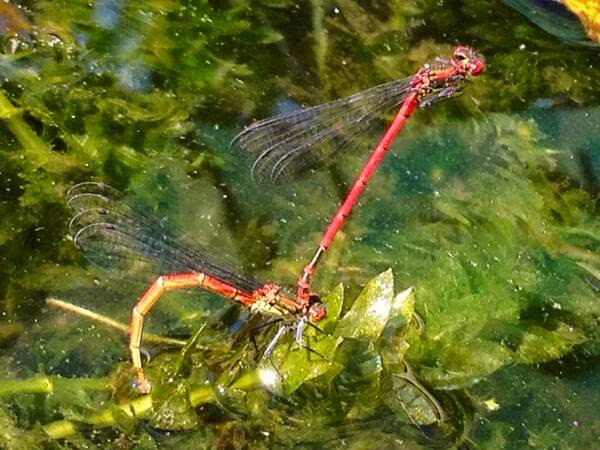
One of the first to emerge will be the Large Red Damselfly. Damselflies can be distinguished from Dragonflies by two simple observations. First the wings. Most Damselflies hold their wings back in line with their bodies when sitting at rest, Dragonflies hold their’s out 90º away from the body. The second thing to look at is the abdomen. On Damselflies, the abdomen is long and thin, Dragonflies vary in length, but for the most part, their abdomens are much thicker. there is one more observation, but you have to get a bit closer to see it and it’s all about the eyes. Damselflies eyes are set apart from each other, whereas Dragonflies eyes meet in the middle and are relatively huge for their head.
A pair of mating Large Red Damselflies.
If you want to come to Lackford to see some wildlife, don’t forget that we have a large range of FSC guides in the shop to help you identify the things you see and it’s always worth chatting to the staff to find out what is happening where.
Sightings
At last, the elusive Kingfisher has been spotted and is showing well at the false bank at Hawker Pool. It is believed that they may nesting there and feeding their young, so this is a good place to try on a regular basis if you want to see Kingfishers. However, as always, it’s best to ask in the centre first to save a wasted journey. Common Sandpiper as mentioned above has been spotted from Steggall’s along with Lapwing, Egyptian goose and Tufted Duck. Red Crested Pochard can still be seen from The Fuller Mill hide and Great Crested Grebes are nesting near Bess’ hide giving everyone a good show.
Little Ringed Plover, Redshank and Oystercatcher to name a few, are being spotted on the Slough. Willow warbler and Nightingales are still being seen and heard from around the car park outside the visitor centre and Blackcap and Chiffchaff can be spotted all around the reserve.
The Spring Arrival list may be full, but there’s still more to come and over the next few weeks as more and more birds arrive, the reserve should become full of the sounds of birds singing and calling. One of these special ones to listen out for in the coming weeks is Turtle Dove, if we’re lucky. These birds are having a very hard time of late with over hunting in Europe and loss of habitat. If you think you’ve heard or seen one on the reserve, then please share your sighting with the staff in the centre so that we can share it with others, thanks.