Showing posts with label Sand martin. Show all posts

Wednesday, 6 May 2015

The darling bugs of May.

Wow, where does the time go? It only seemed not too long ago the reserve was getting a dusting of snow, now leaves are on the trees, flowers are in bloom and people are beginning to venture out in t-shirts. This was especially the case over the bank holiday weekend at Lackford, where we had the latest in our themed Wild for the Weekend event called May Bugs!

The weather, all except for Sunday, held out for us and the bug hunting and pond dipping sessions were well attended by eager adventurers wanting to explore unknown worlds. Saturday and Monday saw Visitor Assistant Hawk out on the reserve encouraging children to get involved in bug hunts. Armed with sweep nets and bug pots, the children got down to finding the creatures that inhabit the long grass and hedgerows near the double-decker hide. A variety of bugs were caught for Hawk and volunteers Joe and Ollie for them to identify, the majority of which were spiders. The air was alive with orange-tip butterflies, which had many children eager to capture one, in hot pursuit but often without success.

Lets get bug hunting!
One regular captive of the bug pot was ladybirds, with 7, 22 and 24 spot ladybirds being caught and recorded. The were plenty of small beetles being caught too including this beautiful green tiger beetle.

Green tiger beetle.
The green tiger beetle is one of those insects that has some fascinating facts about it. These are fast running insects that are indicative of heathland as they love bare sandy soil which they scuttle over to catch their prey, which is mainly other insects.

They can run so fast that they have to stop frequently to allow their eyesight to catch up with them! Their large bug like eyes, allow them to see for long distances making them very hard to catch as they can see you approach from a distance.

The Monday saw a welcome return to the lakes, damselflies! Yes, there seemed to be a small emergence event down by Atlas hide of blue-tailed and large red damselflies. They could just be seen as their fine gossamer wings flitted in the sunlight just above the grass. Lackford has a Site of Special Scientific Interest designation for its 17 species of dragonflies, so these two species are just a taster of what is to come.

The pond dipping event on Sunday saw Visitor Officer Mike and volunteer Joe outside, but under cover exploring the depths of one of our ponds. Lots of interesting things were found from horsehair worms, diving beetle larvae, shrimps and dragonfly larvae. Despite the weather, everyone who came said they really enjoyed and were amazed at the diversity of life often unseen in such a small pond.

Sightings

The lovely weather over the weekend saw many people seeking out the wildlife at Lackford, so the sightings were many. Hobby’s seemed to be the highlight for many with 5 or 6 being spotted at a time towards the rear of the sailing lake.The nightingale is still in full song in the scrub near the education meadow and lesser whitethroat, garden and willow warbler’s are being heard from around the car park. Redshank is still being seen at the Slough and buzzard’s can often seen circling from all over the reserve. 

Lesser whitethroat © Ian Goodall

Buzzard © Ian Goodall
Also to be seen in numerous places are blackcap, reed and sedge warbler’s, marsh tit’s and treecreepers. Swifts, swallows, house and sand martin’s continue to be seen and the common sandpiper can occasionally be spotted down at Steggall’s.

A rather busy sightings board.
Butterflies have been busy too with many orange-tips and peacock butterflies around. Brimstone’s and comma can be seen near the double-decker hide and small copper’s are to be found along the path between the centre and Tickner’s hide. Keep your eyes peeled ahead of you along this path and you may even spot a green tiger beetle. 

Binoculars

Some of the wildlife above can be seen quite easily around the reserve, however, some of it we all need a helping hand to see. Not all of us are lucky enough to own a pair of binoculars, or sometimes through plain forgetfulness, we leave them at home only to realise this when you park the car in the car park. If this sounds familiar, fear not. Pop into the centre and see a member of staff and you can hire some binoculars so your visit isn’t a wasted journey. 

We also stock a range of fine binoculars from Viking. These binoculars are excellent for wildlife spotting and are of a good quality that is built to last. 

A fine range of optics
So whether you fancy making the step to buying your first pair of binoculars, or fancy upgrading your old faithfuls, pop in and try our new range at Lackford. All of our staff will be able to give you expert advice and help you find the ideal binoculars for you.


Monday, 13 April 2015

Incoming!!!

Well, as predicted, the spring arrivals have made a big push and we've seen lots of new arrivals this week. This was the Spring arrivals sheet at the start of last week:

Last week's arrivals list.
And this is how it stands after this weekend:

This week's arrival list.
As you can see, the lull in the cold westerly wind has allowed a large influx of migrant birds to arrive.  A lot of these sightings are thanks to you, our visitors to the reserve who come back into the centre after a wander around and let us know what's been seen, thank you.

The Willow Warbler has been heard singing in the car park and as you can see from above, we still await the Garden and Reed warbler, the latter of which should appear any day soon as it has already been spotted at one of our nearby reserves Redgrave & Lopham Fen on the 10th April.

One of the first to lead the way last week was a Cuckoo, which could be heard in Ash Carr, and two lucky visitors, Jane and Ken Rowe, actually got to see it. However, the weather changed again and it is thought that the bird has moved on as it hasn't been heard since. But fear not, according to the BTO Cuckoo Tracker, many of the tagged cuckoo's are yet to arrive back. So plenty more to come.

Another bird that's been a bit elusive this week is our Kingfisher's. Often a familiar and popular sight at Lackford, however, now is the breeding season and the females are most likely sitting tight on the nest whilst the male is off out on the constant hunt for food to feed the female. There have been a few glances of the birds around the reserve, but not many where the bird is sat perched. So keep your eyes open, they are still around, just a little busy, that's all.

One bird that has been seen and heard in increasing numbers this week was the Blackcap

A singing Blackcap.

A not so tasty snack!

Those regular visitors to Lackford know that our cake is a lovely tasty snack to reward yourself with after a long arduous walk watching all the wildlife that is here. Hard work, but someone has to do it! However, there was one who found what it thought was a tasty snack, but was not impressed. Who? Our regular night time visitor to our feeder cam, the Tawny owl. But this time, he brought along a catch, an unfortunate toad. However, it didn't take long for the owl to realise that toads are not good food and the scene ended well for the poor toad who made his escape.


Toads have a couple of defence mechanisms that help stop it getting predated upon. The first is that they emit a foul tasting poison from their skin. This causes the predator to be sick and secondly the toad when attacked will puff itself up and make itself as rigid as possible, again making it awkward for it to be consumed. This last defence can be seen in the video just before the toad launches itself of the feeding post. It's also interesting to note that the feet and under belly feathers of the owl are clearly quite wet, which means that it actually took a dip in the shallows to catch the toad as opposed to catching it on dry ground.

Not just birds

As the temperature rises, it's not just the birds that are coming out to play. The insects too are beginning to emerge with lots of sightings of various butterflies this week including Comma, Peacock, Small Tortoiseshell, Brimstone, Red Admiral, Small White and Green-veined White. New visitor Robert Quadling got some amazing shots of the insects that were about last Thursday and shared them on Twitter (@SWTLackfordLake).

Green-veined White © Robert Quadling

Beautiful Peacock butterfly © Robert Quadling

Plenty of these now to be seen, Bee-fly © Robert Quadling
As you can see from the above photo, Bee-flies are also in abundance at Lackford. These are flies that look like bees and are parasitoids of mining bees. They seek out the holes of mining bees and then flick their eggs from their tails into the hole of the bee whilst hovering over them. The species above (Bombylius major) is known as the Dark-edged Bee-fly and is quite common in Southern England. 

If you see or photograph an insect whilst walking around Lackford and want to know more about it, then pop into the centre and ask our staff, or send your photo to Hawk, or insect man at hawk.honey@suffolkwildlifetrust.org and we will endeavour to help you.

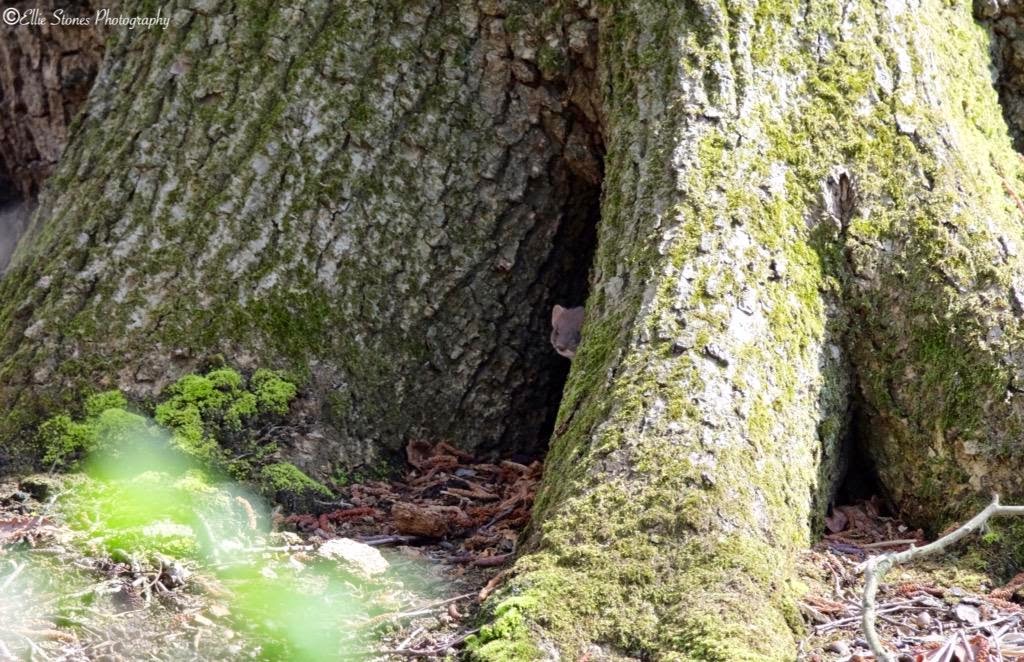
Another regular sighting this week has been the Stoat and one person who was lucky enough to grab a photo of it was regular visitor Ellie Stones who shared her picture of it on Twitter.

Peek-a-boo Stoat. © Ellie Stones

Spring holiday events

We had some events on over the Easter break and one of the was Egg Quest. Demand for this event was so high, that an afternoon session had to be set up to cater for it with over 90 people attending.

Activities for all.

Daisy with her self made mouse mask

Collages and big smiles

Bringing the art out in kids

A selection of the collages that were made.
Thankfully, the weather stayed lovely and sunny and everyone had a good time. If you would like to attend one of our events at Lackford, then please see our Forthcoming events panel on  the right hand side of this blog, or alternatively, you can look at our What's on guide for the whole of Suffolk here.

Sightings

Well, as you already know from above, lots of new things about. But there was also another new arrival that wasn't on the list and that was Little Gull. These have been varying in numbers all week from 2 -12 birds seen at the sailing lake and also at Steggall's. Barry Woodhouse managed to get some shots from over the Sailing lake.

Little gull in flight © Barry Woodhouse
Little Gull © Barry Woodhouse
Other sightings include the Red Crested Pochard's at Fullers mill hide, the Great Crested Grebe's are now nest building near Bess' hide and this is also thought to be where the Kingfisher's are nesting too. Ash Carr is still good for Nuthatch, Coal and Marsh tit, Blackcap, Goldcrest and Treecreepers. Redshank, Oystercatchers, the occasional Goshawk and Red Kite can be seen from Bill's hide and Chiffchaff's can be seen and heard nearly everywhere from around the reserve.

Tufted Ducks, can be seen at the Sailing Lake and at Steggall's and the Sparrowhawk has been seen from various parts of the reserve.

A pair of Tufted Ducks © Barry Woodhouse
House Martin's were also spotted over the sailing lake and the centre which brought our bird species total up to 118 birds for 2015
The current bird species list for 2015 so far

Remember, if you have sightings you wish to share or add to our board, please do so by popping into the visitor centre.

Monday, 30 March 2015

Possibly the best Nuthatch in Suffolk!

It's been all over Twitter, has also been seen on Facebook and has even made an innocuous tree stump a local celebrity. Yes, the Lackford Stump, as it has become to be known, is the frequent stage for our resident Nuthatch's feeding antics. Many photos have been posted right across social media of this beautiful bird coming down for a treat. Regular visitor and photo contributor Barry Woodhouse shared some of his photos of it recently.

Female Nuthatch © Barry Woodhouse

Male Nuthatch © Barry Woodhouse
Of course, the Nuthatch isn't the only bird taking advantage of the Lackford Stump. Regular visitors to the stump also include Marsh, Coal, Great, Blue, Long-tailed tits and Dunnock. The stump is right next to the path, so if you decide to visit the stump to take photos, please be aware, the path and those who walk on it come first.

Great tit with peanut © Barry Woodhouse

Blue tit © Barry Woodhouse

"Look Ma, no wings!" Coal tit © Barry Woodhouse
Dunnock © Stuart Finley
It wasn't going to be long before other creatures took advantage of the stump either. Regular visitor and photographer Barry Woodhouse also shared these pictures to Twitter using our @SWTLackfordLake handle and #lackfordlakes hashtag (thanks Barry).

Grey squirrel taking advantage of the stump © Barry Woodhouse

New arrivals

There have been some new arrivals this week on the reserve, but they didn't fly in, they broke in. Egyptian geese hatched their young this week down at Steggall's.

Egyptian Goose and gosling © Rich Berry
Thanks to Rich Berry for sharing this lovely photo on our Twitter page. Another visitor who got some great shots and posted them to our Facebook page was Stuart Finley.

Egyptian goose and young © Stuart Finley

© Stuart Finley
Another new arrival was a bit of a surprise for the Visitor centre staff. Although we know we have Tawny owl's on site, we didn't expect one to come to the feeder cam in the wee hours. Although the food there wouldn't be to its liking, the owl was obviously using the post, which stands 7ft high, as an observation post to look for rodents. This was the first visit on the 24th March where we got to see a close up of his feet and talons.


The next visit was a few days later where it swooped on to one of the poles that hold the feeders. This time we got to see more of its head and its ability to turn its head right round.


Plans are afoot to make a small adjustment to the camera which will allow us to move it back a bit from the post and allowing us to see the owl in full, for it seems that he is a regular visitor and our visitors have enjoyed watching the video in the centre.

Moving away from birds, we’ve had the moth trap out this week and despite the very changeable weather of late, we managed to trap around 6 moths of three different species.

From left-right: Hebrew Character, Clouded Drab and Small Quaker
Some of the early moths can be a bit on the dull side, but stay with us and things will soon change. An exciting find on the reserve this week in two separate places were newts! Yes, year old Smooth newts that had spent most of the winter hidden away were found.

Smooth newt found by the reserves team.
Back to bird and Canada geese, we have a few, have a nest and Alan Reynolds grabbed this shot to share on Twitter.

Canada goose gently tends her eggs © Alan Reynolds
Alan also managed to grab this cracking photo of a buzzard flying over the reserve.

Buzzard © Alan reynolds
 Another Twitter user @TopkitKev managed to get this shot of a Treecreeper this week.

Treecreeper © @TopkitKev
Remember, if you want to share with us your photos that you’ve taken at Lackford, please email them  to us at lackford.centre@suffolkwildlifetrust.org with your name. Just put ‘For the blog’ in the subject field, thanks.

A big sorry if you sent us a photo that hasn’t been included here, we get quite a few photos sent to us now and we don’t have space for them all. But let that not deter you from sending in photos, we want to see them and we’re working on something new, so watch this space!

Events at Lackford!

We have the Naturally Art workshop for 5-10 year olds on Sat 4th 10-12pm. Pre-booking is essential and you can do this by phoning the reserve on 01284 728706.

We also have the Egg Quest Family morning on the 9th from 10:30 - 12:30. Spaces are disappearing fast, yet if we have enough bookings, we may hold an extra event in the afternoon from 2:30 - 4:30pm. Again, pre-booking is an absolute must, due to the popularity of this event!

Sightings

Well, the species count still continues to climb here at Lackford, with the number now standing at 105 species this year so far. The three new species this week were a Common Scoter on Long Reach, from Bess’ Hide. Don’t all go rushing down there now, it didn’t stop long and was soon on its way again. We did have some photos of the bird sent in, but due to a small technical issue, we can’t show it right now. However, we will post it in next weeks blog.

The 104th bird that helped the count rise were a pair of Curlew which were spotted from Bill’s hide at the start of the week and have been spotted on several occasions since. The 105th bird was spotted by our resident bird expert Paul Holness who, whilst leading a walk around the reserve on a wet Sunday morning, managed to spot a Jack Snipe, which was with two common Snipe and was seen again from Bill’s. Buzzards have been seen on several occasions and some displaying Goshawk’s too. Goldcrest, Nuthatch, Tits, Treecreepers, Redwing and Green Woodpecker have all been spotted down at Ash Carr. 

Redwing © Barry Woodhouse
We still have some Goldeneye on the sailing lake and Red Crested Pochard can still be seen from Fullers Mill hide. Great Crested Grebes are still displaying at Atlas hide and there are still some Lapwing about at Steggall’s. Redshank are still being seen from Bill’s hide as well.

Chiffchaff can be heard from nearly everywhere on the reserve and Cettis warblers are heard calling from the path around the sailing lake.

On the insect front, large queen Bumblebees have been spotted feeding from the catkins on the reserve this week and Suffolk’s County Hymenoptera (Bees, wasps and ants) Recorder, Adrian Knowles, found a small Two-coloured Mason Bee. This little bee actually builds its nest in empty snail shells and camouflages it by making a wigwam of grass over the shell. Adrian went on to tell me that these are usually found on the wing in early April, but he’s never found one this early before!

We have yet to have a confirmed sighting of a Blackcap yet, but it is due any day soon. Colin Jakes, our resident bird ringer believes that once the wind changes to a nice South Easterly, the birds will come flocking in.

Last, but not least, we thought we would leave you with this beautiful photo sent in to us by Matt Horsham.
© Matt Horsham

Sunday, 22 March 2015

Lackford’s Got Talent!

Well the reserve team have been quite busy this week making a slight alteration to the paths near the Double Decker hide. This was necessary as the open area led to confusion for some, causing them to be a bit lost.

The big machinery was called in.
Using some of the Poplars that were cut down a few weeks ago, a barrier was put in place.

The poplar trunk was then covered with Breckland soil.
By covering the logs with the soil, a unique habitat has been created for invertebrates to live in. In turn, this will benefit other wildlife that will feed off the insects within.

A natural barrier.
This natural barrier will keep people on the paths and hopefully not lost. Then they can enjoy the pleasure of the reserve without a care in the world.

Help for our little friends!

As many of you may know, our hedgehogs have been in serious decline for sometime now with populations down from over 30 million in the 1950’s to just over 1 million now. This trend is not good and we must do all we can to help our spike little garden friends. They provide a valuable service in our gardens eating such pests as slug, snails and leaf beetles. However, the increase in vehicles on our roads, nice clean tidy gardens, pesticides and shiplap fencing to define the borders of our gardens, have not been favourable changes for the hedgehog.

We can do little things to help hedgehogs by reducing our use of pesticides in our gardens, leaving a small gap of a few inches under our fences and garden gates, leaving a pile of leaf little or just let the leaves accumulate a bit around your garden. If possible, you can give them a real boost by providing them a shelter for them to raise young in and/or hibernate in during winter.

An empty wooden box should suffice, along with any leaf litter you can leave lying around. The hedgehog will collect her own nesting material and drag it to the box. We have a wonderful volunteer called Bob who makes hedgehog boxes for the Trust with all proceeds going towards the Trust and these are sold at Lackford with instructions for only £25. 

Hedgehog nesting boxes for sale at Lackford.

They do have a tendency to sell quickly, so make sure you get yours and give Suffolk’s hedgehogs (and your garden) a helping hand.

Your photos!

Many of you have been answering the call to share your photos and wow, what a talented bunch you are, keep them coming.

The Red Crested Pochard is still visible from the Fullers Mill Hide and was captured by Joe Jackson who sent his photo in via email: lackford.centre@suffolkwildlifetrust.org (put ‘For the blog’ in the subject line).

Red Crested Pochard © Joe Jackson
Joe also managed to find a spot where the Nuthatch’s are nesting and grabbed these wonderful shots as they flew to and from the nest.

© Joe Jackson

© Joe Jackson
Chiffchaff’s are in full swing with their song now at Lackford and are often seen from time to time too.

Chiffchaff © Joe Jackson
The Great Crested Grebe’s have been displaying down at Atlas hide and we’ve been getting some great photos sent in. Jon Winnan sent us these:

Having a break © Jon Winnan

Close up © Jon Winnan
A member of the visitor team caught this shot in mid display.
And when they’re not displaying, they have to build up that energy and feed. Greg Veness caught this shot of one of the Grebe’s making off with a spikey, but tasty Perch. He shared it with his followers on Twitter by using our Twitter name (@SWTLackfordLake).

© Greg Veness
Jon also caught this Snipe showing it’s plumage off.

© Jon Winnan

© Jon Winnan
Barry Woodhouse also sent us his images of a Kingfisher he captured here at Lackford.

© Barry Woodhouse

© Barry Woodhouse

© Barry Woodhouse

© Barry Woodhouse
We would like to thank all of you for your images and please keep them coming. If you have any images that you have taken at Lackford that you want to share with us, then email us with the words ‘For the blog’ in the subject line and we will do our best to feature them.

Sightings


Not 1, not 2, but 3 Sand Martin’s have been spotted over the sailing lake this week, a sure sign that the weather is improving. A female Marsh Harrier was seen flying past the visitor centre too.

Female Marsh Harrier.
Our yearly total is now up to 102 today thanks to a Common Crane seen flying south over the reserve. Peregrine, Red Kite’s and Buzzard’s have also been spotted flying over too! 

Red Crested Pochard as mentioned above at Fuller Mil hide, Cettis Warbler can be heard from the path along the sailing lake where Goldeneye can be seen bobbing around. The Kingfisher is still showing up at the visitor centre pond from time to time and Chiffchaff’s can be heard and seen at various points around the reserve. Siskin, Coal tit, Marsh tit & Nuthatch have all been showing well down at Ash Carr. Here’s photo one of our staff managed to get lately.

Nuthatch © Hawk Honey
Snipe have been seen down at Steggall’s and Bill’s hide on the Slough. Also spotted on the Slough have been Shelduck, Heron’s, Redshank and Teal.

Redshank seen from Bill’s hide.
Don’t forget to pop into the centre when you arrive to find out what’s happening, the staff are very friendly and don’t bite. Also let us know what you’ve seen regardless of how common or unimportant you think it is. We often get novice birders visiting the centre and people from abroad on holiday who have not seen birds we think are quite common.

Also, if you use Twitter, do pop in and say hello, it’s good to put a face to a Tweet from time to time.

Hope you all have a good week, see you next time.