Showing posts with label Sparrowhawk. Show all posts

Tuesday, 10 November 2015

Long-tailed duck, long time coming.

Well what a surprise! As you may have seen on social media or heard on the Lesley Dolphin BBC Suffolk radio this week, Lackford has a new visitor. Fresh in all the way from Scandinavia and a very rare visitor for inland waters, an adult female long-tailed duck has appeared on the reserve. These ducks are coastal birds and usually are seen much further north than Suffolk. So rare it is, that this is the first time in 20 years a long-tailed duck has appeared at Lackford. The one that showed up in 1995, stayed for 7 months according to resident bird ringer Colin Jakes.

Regular visitor Barry Woodhouse managed to get this shot of the bird from Bess' hide.

Female long-tailed duck by Barry Woodhouse
The duck is often seen on Long Reach, but a scope is advised as it divides its time from being in front of the hide to being far away at the back of the lake. It's a diving duck, which spends a lot of its time under water, for up to 30 seconds. So a bit of patience will be required.

Another view by Malcom Hupman
At times the Bess' hide became quite busy with lots of eager visitors wanting to get a view and no-one went away disappointed.

Standing room only at Bess'
Pop into the visitor centre on your arrival to find out where the bird, as well as many other things, is showing.

It's not long now.

Well, it only feels like last month had just turned spring and christmas is almost upon us. The year has flown past, it must have been fun, so they say. So, getting ready for the festive time, we now have our christmas cards in stock.

A fine selection of cards to choose from.
We also have a Lackford christmas card if you want to show your friends and family where you spend your time throughout the year.
Christmas time at Lackford Lakes by Michael Coulter
There are 6 cards to a pack, which are very reasonable priced between £2.75 & £2.95 with all proceeds going towards the Trust.

We have plenty of new stock in the shop too with lots of ideal gifts for the naturalist in your family.

Something for everyone in our shop.

A new special offer.

It's winter time and now more than ever, your garden birds need their feed. That's why here at Lackford, you can take advantage of our special offer. Every time you buy a small bag of bird food from us at Lackford, we will stamp your loyalty card. Collect 5 stamps and you'll receive your 6th bag FREE! So why not pop into today and get your loyalty card from the counter with your first bag.

Our special offer.

Despite the warm weather

Despite the unseasonably warm weather of late, we now how firewood back in stock to keep you warm when the weather does take a turn to chilly temperatures. It's £6 a bag and can be bought from the visitor centre. 

Sightings

Kingfisher continues to show around the reserve, favorite spots to see it are Bess', Atlas, Double-decker and Bill's hides. Goldeneye have arrived and have been spotted on the sailing lake and from Bess'. Wigeon, teal, pochard and shoveller are increasing in numbers and can be seen at various places across the reserve.

Another oddity turned up last week in the shape of a black swan. This is most likely going to be an escapee.

Black swan by Barry Woodhouse
The swan like to move around a bit from one end of the reserve to the other, but Plover lake is its favorite spot at the moment.

Nuthatch, goldcrest, treecreeper, long-tailed tits and siskin are regularly being spotted down at Ash Carr. 

It's an interesting time of year at Lackford where birds are coming in to spend their winter months and this can be seen every evening when the gulls come into roost on the sailing lake in their thousands.

We look forward to seeing you soon.


Wednesday, 16 September 2015

Otterly brilliant

Quite a little burst of warm weather of late has sat over Lackford and this has made for good views of the kingfisher and the otter, the latter seems has taken quite a liking to Mill Deep, which can be viewed from Fullers Mill hide. Visitor Assistant Hawk Honey took a stroll down there this week in the hope of setting up a trail cam to catch some video footage of the otter, only to find the otter happily fishing away just feet from him. He managed to catch this video.


The otter has been spotted on the reserve everyday for nearly a month now and it doesn't seem to be showing any signs of moving on, which is good news. Lets hope it continues to make Lackford its home.

Kingfishers also seem to be happy here at Lackford and have been spotted all over the reserve at the following hides: Double-decker, Bill's, Bess', Atlas, Steggall's and the Visitor Centre. 

Kingfisher on the 'T' piece at the Visitor Centre

New for Suffolk

A first ever record for Suffolk was recorded last weekend, when Visitor Assistant Hawk Honey spotted an ichneumon wasp flying against the glass window in the centre. Hawk caught the wasp and took some photos before releasing it back outside. Later, with the help of ichneumon specialist Gavin Broad, the wasp was identified as Dusona falcator (sorry, it doesn't have a common name). This species preys on the larvae (caterpillars) of the buff-tip moth, which it paralyses and takes to a nest chamber, where it lays an egg on the caterpillar before sealing the chamber. The caterpillar will be food for the wasp larvae during the winter months until spring the following year.

On submitting a record of this find to the Suffolk Biological Records Centre, we found out that it was a first ever record for Suffolk! Looking further into the records, there only seems to be one other record of this species in the UK, which makes the find even more important.

Dusona falcator in the hand.
and from the side.
Other sightings from around the reserve have included water rail at the Double-decker hide along with green and common sandpipers. Little egret, teal, tufted ducks and little grebe have also been spotted here. Great crested grebes, hobby's, pochard have been seen from Bess' hide looking across Long Reach. As the autumn season begins to get into full swing, we are more likely to see more ducks arriving at the reserve and before we know it, all the winter regulars such as goosander, goldeneye and pintail will soon be back.

A sure sign that autumn is on the way is the arrival of wigeon on the sailing lake. 24 were spotted last week and although often seen at the sailing lake, it is always best if you pop into the visitor centre on your arrival just to check where they were last spotted, as they do like to move around form time to time. Goldcrest, nuthatch and siskin have been spotted in Ash Carr near the corner of Hawker Pool.

Goldcrest at Ash Carr by Colin Robson
A few butterflies are still to be seen on the warmer days with comma, painted lady and red admiral's still being reported.

Painted lady still seen on the reserve.


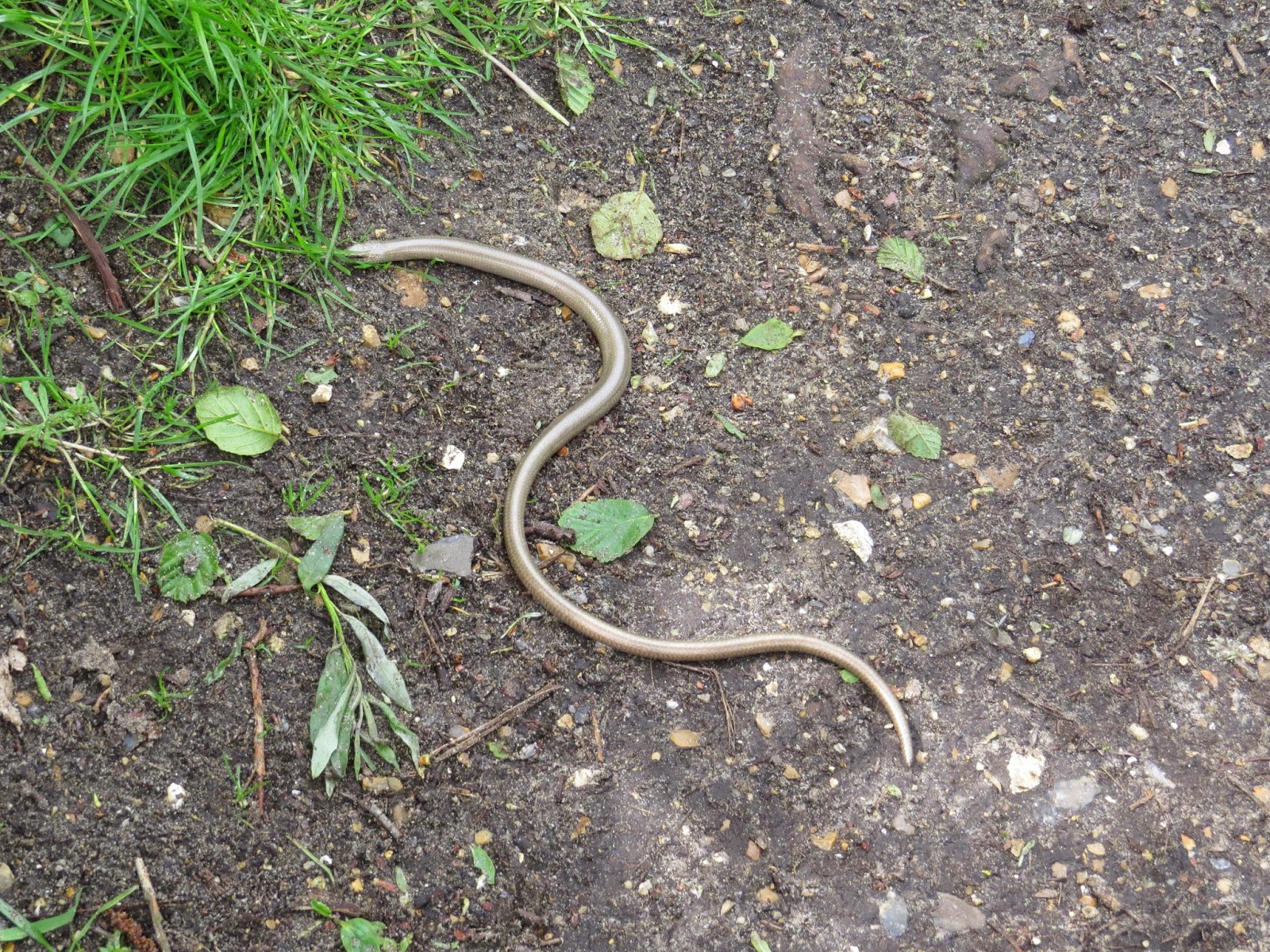
Grass snake has been seen in several locations around the reserve along with slow-worm's too.

Grass snake photographed by our wildlife guide Colin Robson
There are a few dragonflies and damselflies still about despite the cold spell and we are now seeing some migrant hawkers as well as the odd willow emerald damselfly. 

Another unusual ringing!

Some time back, you may remember the image of the greylag goose with a bright orange ring neck collar being photographed on the reserve by regular visitor Rich Berry.

Unusually rung greylag at Lackford by Rich Berry
Well it would seem the greylag wasn't the only one with this unusual attire, as regular visitor and member Mike Bishop grabbed this photo of a canada goose on the reserve.

Another rung goose by Mike Bishop
We sent the information to Lee Barber at BTO who sent us back this information about the latest ring wearer.

Recapture History for ALJ

Ring No              Type   Age    Capture        Date          Init    Details

Canada goose
5270632              N        4M                         06/07/15    DJH  Nunnery lakes Reserve Nth
                            O         2      Sighted(R)   25/07/15    NJM  Nunnery, Thetford, (1km,W, 19days)
                            O         2      Sighted(R)   07/08/15    JHM     "    "      "      "   " (1km,W, 32days)
                            S          2      Sighted         12/09/15   MBI   Lackford lakes (14km,SW, 68 days)

Lee also went on to say 
The bird you saw was an adult male ringed at the BTO Nunnery reserve this year. This bird has been interesting as it has not been seen away from here since being ringed. The age code 4 means that it hatched before the current calendar year when it was ringed. The age code 2 means it was seen as a fully grown bird (i.e. not a chick). 
So if you see any other birds wearing a ring like ALJ or FJH above, then grab a photo and pop into the centre to let us know and we'll find out more about it for you.

Don't forget...

Yes, don't forget to check out what's happening at Lackford in the coming weeks by clicking on the Forthcoming Events section found down the right-hand side of this blog. 

If you have any photos that you've taken on the reserve, don't forget to send them to us so we can show them off for you.


Tuesday, 23 June 2015

You stuck the ring where???

Well the weather of late seems most un-June like, yet the wildlife doesn't seem to mind too much as things are carrying on pretty much as normal at Lackford. This includes the kingfishers at Hawker pool which have now fledged and can be seen on various parts of the reserve.

Newly fledged kingfishers by Joe Jackson on Twitter (@EyesOnWildlife)
Our regular visitor and contributor to the blog Ian Goodall also managed to get some shots of one of the adults visiting and leaving the nest hole shortly before the young fledged.

Adult visiting with food. Note how the fish's head is pointed outwards so the young take it the right way.

Young fed, off to find some more.
Shawn Pearce even got a good shot which he also shared on Twitter (@spearcephotos)

Kingfisher in action by Shawn Pearce

Big thanks to everyone for sharing their fantastic photos, really appreciated.

You put the ring where???

A very unusual photo appeared on Twitter via Rich Berry this week, of an unusually ringed bird.

Ringed Greylag 'FJH' by Rich Berry
After a little digging we were able to find out more about this bird via the person responsible for ringing it, Lee Barber, Recoveries officer at BTO Thetford. Lee emailed us to say:

The bird you have seen are part of a monitoring program with the aim of finding out where Greylag and Canada Geese move to after they have been ringed and neck collared during their annual moult. I have attached a poster that gives a bit more detail into this project.  The bird you saw was an adult male ringed at BTO HQ, Thetford in 2014. This bird has been interesting as it has not been seen away from the BTO since being ringed and hasn't been reported for some time. The age code 4 means that it hatched before the current calendar year when it was ringed. The age code 2 means it was seen as a fully grown bird (i.e. not a chick). It is good to hear this bird is still going strong... 

Lee also sent us the recapture history for FJH:

FJH's recapture history 

At first when we began digging, it was thought that FJH was part of an Icelandic ringing project. However, as we can see, FJH comes from much closer to home. But still an interesting find and if you see anything like this at Lackford, please let us know so that we can inform others. Big thank you to Rich for sharing this photo and well done for spotting FJH.

What's the point of nettles?

Let's face it, nettles are not everyone's idea of a garden plant. No-one actually plants nettles in their garden, yet they are a very important plant in our ecosystem as Rich Berry proved with this photo taken last week on the reserve.

Nibbly caterpillars enjoying the nettles.
Yes, these caterpillars love nettles and we love the caterpillars, especially as these are the caterpillars of the beautiful peacock butterfly. One to keep an eye out for when you visit Lackford.

Another one to watch out for at Lackford are our beautiful bee orchids. These can be seen along the path leading from the centre to Bernard's hide. East Anglian columnist Nicola Miller shared her photo of the bee orchids on Twitter:

Bee orchid by Nicola Miller (@NicMillersTale)

Sightings

Well as we already know, the kingfishers are showing very well and after weeks of only being seen at Hawker Pool, they can now be seen across the reserve with sightings coming in from Double-decker, Bernard's and Reed hides.

Raptors are also showing well with daily sightings of red kite, hobby, sparrowhawk and buzzard over the reserve.

Adrian Sheppard spotted this water rail yesterday at Reed hide.

Water rail by Adrian Sheppard
The great crested grebe and their chicks can still be seen from Bess' hide and the red crested pochard still has three chicks and can be often seen at Fuller's Mill hide. Shelduck's still have seven chicks and can be seen from Bill's hide. There was a touch of drama today at the centre when a female mallard brought her chicks to the centre pond and abandoned them! She flew off shortly after arriving with the chicks, which left the onlooking visitors feeling a bit anxious and worried. But thankfully, after about 20 minutes, she returned and calm was restored to the centre.

The butterflies and dragonflies are showing up well at the reserve with sightings of meadow brown, ringlet, painted lady and large skipper and emperor dragonflies also being spotted on the reserve. The best place to see these are on the summer trail and the path towards Bernard's hide.

Tony and Sandy (@tonyandsandy) had a very productive day recording all these beautiful moths at Lackford recently

A wide selection of moths seen at Lackford (left to right: Longhorn moth, silver ground carpet, straw dot, cinnabar moth, clouded border, snout and a geometrid moth)
If you would like to see more moths close up, then don't forget to come along on our Wild for the Weekend on the 4th and 5th July, where we will be displaying some of the moths caught in our traps here at Lackford. This is always a popular event and we will be displaying our moths at 1 pm on each day that weekend. Don't miss out!!!

Don't miss this either!

Our new provider of optical equipment, Viking, will be at Lackford this weekend (27th June) to demonstrate their range of optics. If you think you deserve a new pair of binoculars or are thinking of getting a scope perhaps, or even just want to peruse and try some out, then come on down between 10am - 4pm in the visitor centre.


Tuesday, 12 May 2015

A welcome return

Yes, a very welcome return this week to the very endangered Red Data Book species. Yes, turtle dove's have been heard and spotted  around the reserve, but only solitary or pairs of birds have been spotted at this stage. 

Another new visitor to the reserve this week is our first dragonfly, which has always been present at the reserve lurking at the bottom of a pond, but has now emerged into adulthood to begin the summer days looking for a partner. A broad-bodied chaser female was spotted and photographed by Tony and Sandy (@tonyandsandy) on twitter.

Broad-bodied chaser by Tony and Sandy
They also managed to capture this beautiful and a first for this year, brown argus butterfly.

Brown argus by Tony and Sandy
Butterflies have been in abundance this week too with still lots of orange-tips, small white, green-veined white, speckled wood, comma and peacocks about. 

Comma by Duncan Fletcher Brown
Another bunch of new arrivals came  in the shape of long-tailed tits and was captured by Terence Chaplin.

5 newly fledged long-tailed tits await for the parents to bring back food. © Terence Chaplin
Terence even spotted this slow worm making its way along the path near Reed hide

Slow worm by Terence Chaplin
More damselflies have been spotted on the reserve this week and our wildlife guide Colin Robson managed a photo of a blue-tailed damselfly.

Blue-tailed damselfly by Colin Robson

A grand day out

We had a lovely review this week from a couple of visitors at Lackford, who enjoyed their day so much. they decided to write a blog about it. You can read all about their adventure in their excellent blog here.

Sightings

Well, the sightings are still coming in and there's lots to be seen here at Lackford, as the sightings boards testifies to and the eagle eyed among you will have noticed we are now on 127 species of bird at Lackford.

Sightings board at Lackford
Our newest species to hit the list are a pair of redstart and turtle dove, which we mentioned earlier. Common sandpiper, hobby's, cuckoo and the warbler's (Cettis, garden, reed, sedge, willow, etc) can be seen from all around the reserve, starting in the car park where many are heard when visitors get out of their cars.

Reed warbler by Ian Goodall

Marsh tit with spiders web nesting material by Ian Goodall


Kingfisher's are still nesting down at Hawker pool, although they are often spotted as a blue flash as they dart back and forth from the nest.

Buzzard's, sparrowhawk can be seen from time to time around the reserve and we are getting more sightings of red kites drifting over. This species has made a spectacular recovery since breeding projects began in the late eighties/early nineties and have spread eastwards across the country ever since. So in time, these magnificent birds will soon become a regular sighting at Lackford.

SPECIAL BAT WALK 23RD MAY

As part of our themed Wild for the Weekend -Things with Wings event on the 23rd May, we will be having a bat walk at Lackford to explore that we don't often see. Places are limited, so booking is essential and you can do this by phoning 01284 728706. 

Don't miss out, book your place now!


Wednesday, 6 May 2015

The darling bugs of May.

Wow, where does the time go? It only seemed not too long ago the reserve was getting a dusting of snow, now leaves are on the trees, flowers are in bloom and people are beginning to venture out in t-shirts. This was especially the case over the bank holiday weekend at Lackford, where we had the latest in our themed Wild for the Weekend event called May Bugs!

The weather, all except for Sunday, held out for us and the bug hunting and pond dipping sessions were well attended by eager adventurers wanting to explore unknown worlds. Saturday and Monday saw Visitor Assistant Hawk out on the reserve encouraging children to get involved in bug hunts. Armed with sweep nets and bug pots, the children got down to finding the creatures that inhabit the long grass and hedgerows near the double-decker hide. A variety of bugs were caught for Hawk and volunteers Joe and Ollie for them to identify, the majority of which were spiders. The air was alive with orange-tip butterflies, which had many children eager to capture one, in hot pursuit but often without success.

Lets get bug hunting!
One regular captive of the bug pot was ladybirds, with 7, 22 and 24 spot ladybirds being caught and recorded. The were plenty of small beetles being caught too including this beautiful green tiger beetle.

Green tiger beetle.
The green tiger beetle is one of those insects that has some fascinating facts about it. These are fast running insects that are indicative of heathland as they love bare sandy soil which they scuttle over to catch their prey, which is mainly other insects.

They can run so fast that they have to stop frequently to allow their eyesight to catch up with them! Their large bug like eyes, allow them to see for long distances making them very hard to catch as they can see you approach from a distance.

The Monday saw a welcome return to the lakes, damselflies! Yes, there seemed to be a small emergence event down by Atlas hide of blue-tailed and large red damselflies. They could just be seen as their fine gossamer wings flitted in the sunlight just above the grass. Lackford has a Site of Special Scientific Interest designation for its 17 species of dragonflies, so these two species are just a taster of what is to come.

The pond dipping event on Sunday saw Visitor Officer Mike and volunteer Joe outside, but under cover exploring the depths of one of our ponds. Lots of interesting things were found from horsehair worms, diving beetle larvae, shrimps and dragonfly larvae. Despite the weather, everyone who came said they really enjoyed and were amazed at the diversity of life often unseen in such a small pond.

Sightings

The lovely weather over the weekend saw many people seeking out the wildlife at Lackford, so the sightings were many. Hobby’s seemed to be the highlight for many with 5 or 6 being spotted at a time towards the rear of the sailing lake.The nightingale is still in full song in the scrub near the education meadow and lesser whitethroat, garden and willow warbler’s are being heard from around the car park. Redshank is still being seen at the Slough and buzzard’s can often seen circling from all over the reserve. 

Lesser whitethroat © Ian Goodall

Buzzard © Ian Goodall
Also to be seen in numerous places are blackcap, reed and sedge warbler’s, marsh tit’s and treecreepers. Swifts, swallows, house and sand martin’s continue to be seen and the common sandpiper can occasionally be spotted down at Steggall’s.

A rather busy sightings board.
Butterflies have been busy too with many orange-tips and peacock butterflies around. Brimstone’s and comma can be seen near the double-decker hide and small copper’s are to be found along the path between the centre and Tickner’s hide. Keep your eyes peeled ahead of you along this path and you may even spot a green tiger beetle. 

Binoculars

Some of the wildlife above can be seen quite easily around the reserve, however, some of it we all need a helping hand to see. Not all of us are lucky enough to own a pair of binoculars, or sometimes through plain forgetfulness, we leave them at home only to realise this when you park the car in the car park. If this sounds familiar, fear not. Pop into the centre and see a member of staff and you can hire some binoculars so your visit isn’t a wasted journey. 

We also stock a range of fine binoculars from Viking. These binoculars are excellent for wildlife spotting and are of a good quality that is built to last. 

A fine range of optics
So whether you fancy making the step to buying your first pair of binoculars, or fancy upgrading your old faithfuls, pop in and try our new range at Lackford. All of our staff will be able to give you expert advice and help you find the ideal binoculars for you.


Monday, 13 April 2015

Incoming!!!

Well, as predicted, the spring arrivals have made a big push and we've seen lots of new arrivals this week. This was the Spring arrivals sheet at the start of last week:

Last week's arrivals list.
And this is how it stands after this weekend:

This week's arrival list.
As you can see, the lull in the cold westerly wind has allowed a large influx of migrant birds to arrive.  A lot of these sightings are thanks to you, our visitors to the reserve who come back into the centre after a wander around and let us know what's been seen, thank you.

The Willow Warbler has been heard singing in the car park and as you can see from above, we still await the Garden and Reed warbler, the latter of which should appear any day soon as it has already been spotted at one of our nearby reserves Redgrave & Lopham Fen on the 10th April.

One of the first to lead the way last week was a Cuckoo, which could be heard in Ash Carr, and two lucky visitors, Jane and Ken Rowe, actually got to see it. However, the weather changed again and it is thought that the bird has moved on as it hasn't been heard since. But fear not, according to the BTO Cuckoo Tracker, many of the tagged cuckoo's are yet to arrive back. So plenty more to come.

Another bird that's been a bit elusive this week is our Kingfisher's. Often a familiar and popular sight at Lackford, however, now is the breeding season and the females are most likely sitting tight on the nest whilst the male is off out on the constant hunt for food to feed the female. There have been a few glances of the birds around the reserve, but not many where the bird is sat perched. So keep your eyes open, they are still around, just a little busy, that's all.

One bird that has been seen and heard in increasing numbers this week was the Blackcap. 

A singing Blackcap.

A not so tasty snack!

Those regular visitors to Lackford know that our cake is a lovely tasty snack to reward yourself with after a long arduous walk watching all the wildlife that is here. Hard work, but someone has to do it! However, there was one who found what it thought was a tasty snack, but was not impressed. Who? Our regular night time visitor to our feeder cam, the Tawny owl. But this time, he brought along a catch, an unfortunate toad. However, it didn't take long for the owl to realise that toads are not good food and the scene ended well for the poor toad who made his escape.


Toads have a couple of defence mechanisms that help stop it getting predated upon. The first is that they emit a foul tasting poison from their skin. This causes the predator to be sick and secondly the toad when attacked will puff itself up and make itself as rigid as possible, again making it awkward for it to be consumed. This last defence can be seen in the video just before the toad launches itself of the feeding post. It's also interesting to note that the feet and under belly feathers of the owl are clearly quite wet, which means that it actually took a dip in the shallows to catch the toad as opposed to catching it on dry ground.

Not just birds

As the temperature rises, it's not just the birds that are coming out to play. The insects too are beginning to emerge with lots of sightings of various butterflies this week including Comma, Peacock, Small Tortoiseshell, Brimstone, Red Admiral, Small White and Green-veined White. New visitor Robert Quadling got some amazing shots of the insects that were about last Thursday and shared them on Twitter (@SWTLackfordLake).

Green-veined White © Robert Quadling

Beautiful Peacock butterfly © Robert Quadling

Plenty of these now to be seen, Bee-fly © Robert Quadling
As you can see from the above photo, Bee-flies are also in abundance at Lackford. These are flies that look like bees and are parasitoids of mining bees. They seek out the holes of mining bees and then flick their eggs from their tails into the hole of the bee whilst hovering over them. The species above (Bombylius major) is known as the Dark-edged Bee-fly and is quite common in Southern England. 

If you see or photograph an insect whilst walking around Lackford and want to know more about it, then pop into the centre and ask our staff, or send your photo to Hawk, or insect man at hawk.honey@suffolkwildlifetrust.org and we will endeavour to help you.

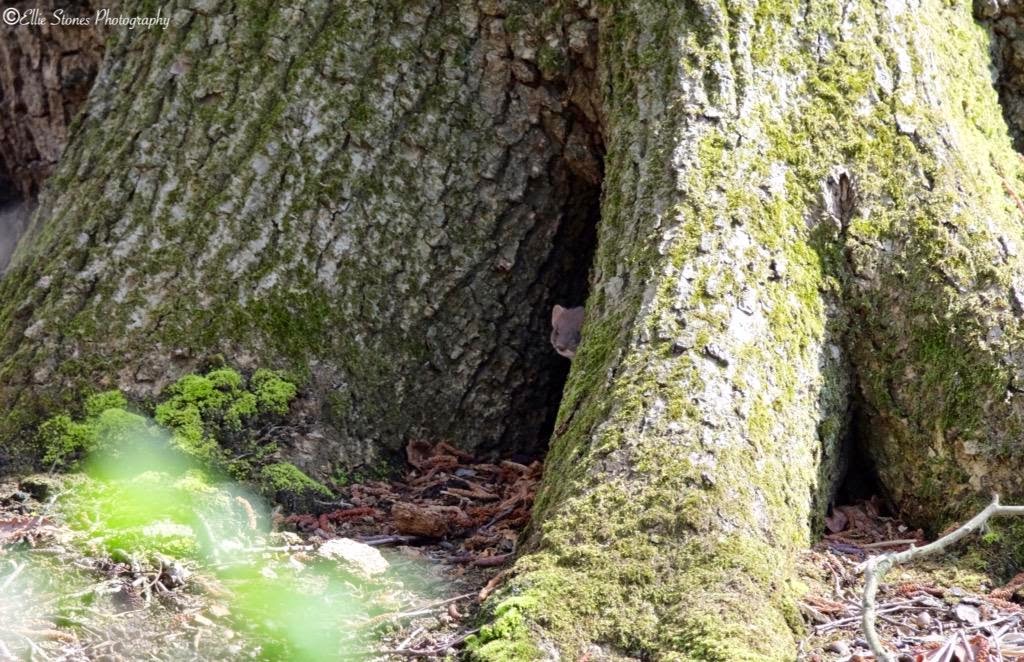
Another regular sighting this week has been the Stoat and one person who was lucky enough to grab a photo of it was regular visitor Ellie Stones who shared her picture of it on Twitter.

Peek-a-boo Stoat. © Ellie Stones

Spring holiday events

We had some events on over the Easter break and one of the was Egg Quest. Demand for this event was so high, that an afternoon session had to be set up to cater for it with over 90 people attending.

Activities for all.

Daisy with her self made mouse mask

Collages and big smiles

Bringing the art out in kids

A selection of the collages that were made.
Thankfully, the weather stayed lovely and sunny and everyone had a good time. If you would like to attend one of our events at Lackford, then please see our Forthcoming events panel on  the right hand side of this blog, or alternatively, you can look at our What's on guide for the whole of Suffolk here.

Sightings

Well, as you already know from above, lots of new things about. But there was also another new arrival that wasn't on the list and that was Little Gull. These have been varying in numbers all week from 2 -12 birds seen at the sailing lake and also at Steggall's. Barry Woodhouse managed to get some shots from over the Sailing lake.

Little gull in flight © Barry Woodhouse
Little Gull © Barry Woodhouse
Other sightings include the Red Crested Pochard's at Fullers mill hide, the Great Crested Grebe's are now nest building near Bess' hide and this is also thought to be where the Kingfisher's are nesting too. Ash Carr is still good for Nuthatch, Coal and Marsh tit, Blackcap, Goldcrest and Treecreepers. Redshank, Oystercatchers, the occasional Goshawk and Red Kite can be seen from Bill's hide and Chiffchaff's can be seen and heard nearly everywhere from around the reserve.

Tufted Ducks, can be seen at the Sailing Lake and at Steggall's and the Sparrowhawk has been seen from various parts of the reserve.

A pair of Tufted Ducks © Barry Woodhouse
House Martin's were also spotted over the sailing lake and the centre which brought our bird species total up to 118 birds for 2015
The current bird species list for 2015 so far

Remember, if you have sightings you wish to share or add to our board, please do so by popping into the visitor centre.