Showing posts with label Lackford Stump. Show all posts

Sunday, 17 January 2016

Happy New Year!

Well a big happy New Year to everyone and we hope the holiday period went well for all of you and your families. The New Year here at Lackford got off to a wonderful start with the centre being open on New Years day, and the turn out to Paul's New Year's Day Bird Walk saw many people in attendance. this helped get our Year's Bird list off to a fine start with 62 species of bird being spotted on the first day. You may remember, we ended 2015 with 136 species of bird seen at Lackford and already on the first day, we're almost halfway there. 

The bird list at the end of New Year's Day. We know it say's 60, two were not reported till later, which
were Common Gull and Magpie.
Currently, the list now stands at 75 with a new bird for Lackford being added last week. Over the last weekend, there were several reports of a great northern diver on a lake not too far from Lackford. However, on Tuesday it disappeared, only to turn up on our Sailing Lake. Big thanks to our resident birder Paul Holness for spotting it. Regular visitor to the lakes and photo contributor to the blog Ian Goodall, managed to get these cracking shots. Thanks Ian.

Great Northern Diver on the Sailing lake by Ian Goodall


 It only stayed for a short while before flying off in an easterly direction. We hoped that it would land on the east lakes and join our Long-tailed duck, who is still showing well on Hawker pool and Long Reach, but alas, it wasn't so.

A little bit of work

Many of the visitors to Lackford may have noticed we've been having a bit of work done on The Slough. Thanks to an anonymous donation, we are re-profiling The Slough in an effort to bring the wildlife closer to the hides. The work will involve making some new spits of land closer in, creating a shallows and removing some small amount of reed-bed.

The view from Reed hide
As you can imagine, the wildlife that usually frequents The Slough has decided to move to the East Lakes part of the reserve with many of the teal, gadwall, shoveller and others being found on Mill Deep and can be seen from Fullers Mill hide.

The major work started just before Xmas and should be completed towards the end of the month. There will also be some revamping and moving of the hides and we will keep you posted as to what and when this is happening.


The new shallows being created.
Yet, come the evening when the work has stopped, the goosanders still come in to roost on The Slough and whilst some of these photos were being taken, a kingfisher flew by. So it hasn't put off the wildlife that much and not before long, everything will be back to normal and hopefully even better than before.

Wildlife rescue

Just before Xmas, our resident birder Paul Holness found an injured male kestrel on the reserve. Despite there being no obvious injuries, the bird could not fly and so we contacted Phoenix Bird of Prey Rescue who came and collected the bird. Their vet found no injuries either and it was most likely suffering some bruising. A couple of weeks of rest saw the bird return to full health and then returned to Lackford for release back to where it was found.

Paul with the kestrel shortly before release. Thanks to Jo Daffin.

A new booking system

We have a new online booking system in place for all events and activities at Lackford. All events are now bookable through the Trust's What's On page, or by clicking on the link to the right of this page in our 'Forthcoming events' section. For those of you who do not have internet access, you can book up by calling our head office on 01473 890089. We can no longer accept bookings at Lackford as we previously did, sorry.

It's not just photos!

Lackford is often frequented by photographers getting snapshots of our wildlife. But this week Richard Thewlis posted some of his lovely paintings of the Lackford wildlife on his Twitter account (@RThewlis) and has agreed to share them here, thank you Richard. I think you will agree, they are lovely paintings.

Teal by Richard Thewlis

Lapwing by Richard Thewlis
According to Richard, these were "Mad rush paint sketches". It would take me an age to paint something like this and still wouldn't be anywhere near as good as these paintings.

Sightings

Well, as previously stated, the long-tailed duck is still present on the reserve and can usually be found on either Hawker Pool or Long Reach, it's always best to pop in to the visitor centre to find out it's latest location on the day.

Siskin and redpoll have been seen altogether in large flocks around the visitor centre. Bullfinches have also been seen in their glorious winter colours around the visitor centre and the car park. Grey wagtail has been spotted on several occasions on the overflow car park and in Ash Carr near Hawker Pool. Goldcrests have also been a common sight at several places around the reserve, but especially in Ash Carr. Here you can also find some siskin flocks, marsh tit, nuthatch and treecreeper.

On the lakes, we have plenty of goldeneye, tufted duck, teal, pochard and wigeon in attendance. Little grebe can often be seen from Fullers Mill hide and little egret from Bess'. Kingfisher has also been showing well at Bess', Atlas and Steggall's as well as at the visitor centre. Here a jay has become a regular visitor to the feeder cam.


Great spotted woodpecker can also be seen visiting the nut feeder at the centre too. The gull roost on the sailing lake is still quite a sight to see, with over 10,000 birds coming in to roost every night. For those who like a challenge, there are still the odd rarity to be found amongst them such as yellow-legged gull. What else will be found and can be added to our ever increasing list?

Don't forget, no matter how insignificant you think your sighting is, please let the vitiator team know, you may add a bird to our species list that hasn't been recorded yet!


Tuesday, 9 June 2015

Kingfishers and dragonflies.

Two new arrivals this week and they weren’t chicks. The first was a pair of avocets which landed near Steggall’s hide. Unfortunately, they weren’t there for long and were soon off, later being spotted at another SWT reserve, Mickle Mere. The other new arrival was the spotted flycatcher, which unlike the avocet’s, should stay a lot longer. So these two new birds brings the reserve bird species list up to 130 for the year. 

The turtle dove has started to be seen again on the overhead wires as you drive into the car park. The best times to see these are early in the morning though. Although, there have been some daytime sightings in the adjacent fields.

The reserves team of volunteers had a bit of a clear out in front of Reed hide recently removing some of the encroaching reed bed. This seems to have had a positive effect, as hoped, as reed warblers have been showing well and also young kingfishers have been spotted there since. The young kingfishers are not the ones from Hawker pool though. These are young believed to be from a nest on the adjacent River Lark that have fledged earlier. The kingfishers at Hawker pool are still feeding their young and it’s believed they should fledge sometime this week, one to keep an eye on.

Juvenile Kingfisher with food at Reed hide © Duncan Fletcher-Brown

And in flight © Duncan Fletcher-Brown

Common terns have now hatched their young and can be seen on Hawker pool and tufted ducks have also been spotted with no loess than 6 chicks and can be seen from Steggall’s hide. Great crested grebes also have young riding on the adults back and can often be viewed from Bess’ hide.

The once famous stars of the Lackford stump, the nuthatch’s, have thought to have fledged their young, yet no-one has seen them yet. Another one to keep an eye out for. 

Strangely, in the middle of the night, the coots at the visitor centre pool, built a new nest on one of the floating islands and their last remaining chick has taken to sitting in the middle of it.
Coot with young in the middle of the new nest.

On the insect front

Things have been perking up on the insect front too and the butterflies seem to becoming out in force now with brown argus, peacock, brimstone, red admiral and common blue among others being spotted.

Male common blue © Rich Berry
Cinnabar moths can still be seen fluttering around the reserve and it won’t be long before their black and yellow caterpillars will be seen munching on the ragwort around the reserve.

Dragonflies are being seen in numbers now and the first black-tailed skimmer was spotted on the reserve at the weekend Damselflies have also been seen emerging from the water down at Orchid hide and are very numerous wherever you go on the reserve.

Dragonflies a plenty © Rich Berry
One damselfly that’s always a sight to see is the banded demoiselle and as usual, these can usually be seen from the bridge just before Bess’ hide. As always, pop into the visitor centre when you arrive to find out what is happening where on the reserve.

© Rich Berry

Monday, 13 April 2015

Incoming!!!

Well, as predicted, the spring arrivals have made a big push and we've seen lots of new arrivals this week. This was the Spring arrivals sheet at the start of last week:

Last week's arrivals list.
And this is how it stands after this weekend:

This week's arrival list.
As you can see, the lull in the cold westerly wind has allowed a large influx of migrant birds to arrive.  A lot of these sightings are thanks to you, our visitors to the reserve who come back into the centre after a wander around and let us know what's been seen, thank you.

The Willow Warbler has been heard singing in the car park and as you can see from above, we still await the Garden and Reed warbler, the latter of which should appear any day soon as it has already been spotted at one of our nearby reserves Redgrave & Lopham Fen on the 10th April.

One of the first to lead the way last week was a Cuckoo, which could be heard in Ash Carr, and two lucky visitors, Jane and Ken Rowe, actually got to see it. However, the weather changed again and it is thought that the bird has moved on as it hasn't been heard since. But fear not, according to the BTO Cuckoo Tracker, many of the tagged cuckoo's are yet to arrive back. So plenty more to come.

Another bird that's been a bit elusive this week is our Kingfisher's. Often a familiar and popular sight at Lackford, however, now is the breeding season and the females are most likely sitting tight on the nest whilst the male is off out on the constant hunt for food to feed the female. There have been a few glances of the birds around the reserve, but not many where the bird is sat perched. So keep your eyes open, they are still around, just a little busy, that's all.

One bird that has been seen and heard in increasing numbers this week was the Blackcap

A singing Blackcap.

A not so tasty snack!

Those regular visitors to Lackford know that our cake is a lovely tasty snack to reward yourself with after a long arduous walk watching all the wildlife that is here. Hard work, but someone has to do it! However, there was one who found what it thought was a tasty snack, but was not impressed. Who? Our regular night time visitor to our feeder cam, the Tawny owl. But this time, he brought along a catch, an unfortunate toad. However, it didn't take long for the owl to realise that toads are not good food and the scene ended well for the poor toad who made his escape.


Toads have a couple of defence mechanisms that help stop it getting predated upon. The first is that they emit a foul tasting poison from their skin. This causes the predator to be sick and secondly the toad when attacked will puff itself up and make itself as rigid as possible, again making it awkward for it to be consumed. This last defence can be seen in the video just before the toad launches itself of the feeding post. It's also interesting to note that the feet and under belly feathers of the owl are clearly quite wet, which means that it actually took a dip in the shallows to catch the toad as opposed to catching it on dry ground.

Not just birds

As the temperature rises, it's not just the birds that are coming out to play. The insects too are beginning to emerge with lots of sightings of various butterflies this week including Comma, Peacock, Small Tortoiseshell, Brimstone, Red Admiral, Small White and Green-veined White. New visitor Robert Quadling got some amazing shots of the insects that were about last Thursday and shared them on Twitter (@SWTLackfordLake).

Green-veined White © Robert Quadling

Beautiful Peacock butterfly © Robert Quadling

Plenty of these now to be seen, Bee-fly © Robert Quadling
As you can see from the above photo, Bee-flies are also in abundance at Lackford. These are flies that look like bees and are parasitoids of mining bees. They seek out the holes of mining bees and then flick their eggs from their tails into the hole of the bee whilst hovering over them. The species above (Bombylius major) is known as the Dark-edged Bee-fly and is quite common in Southern England. 

If you see or photograph an insect whilst walking around Lackford and want to know more about it, then pop into the centre and ask our staff, or send your photo to Hawk, or insect man at hawk.honey@suffolkwildlifetrust.org and we will endeavour to help you.

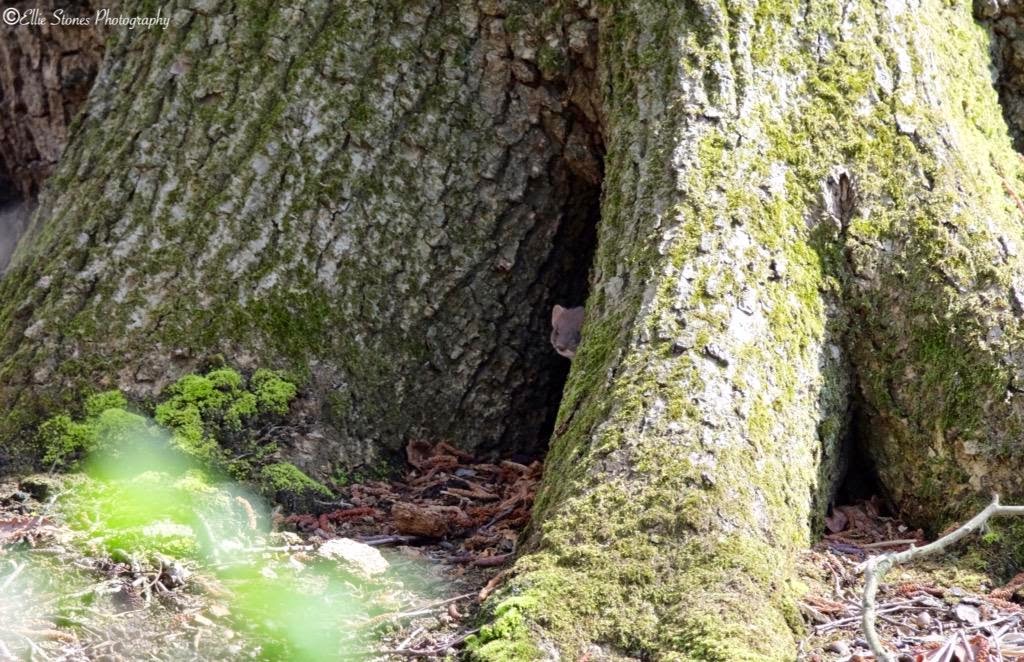
Another regular sighting this week has been the Stoat and one person who was lucky enough to grab a photo of it was regular visitor Ellie Stones who shared her picture of it on Twitter.

Peek-a-boo Stoat. © Ellie Stones

Spring holiday events

We had some events on over the Easter break and one of the was Egg Quest. Demand for this event was so high, that an afternoon session had to be set up to cater for it with over 90 people attending.

Activities for all.

Daisy with her self made mouse mask

Collages and big smiles

Bringing the art out in kids

A selection of the collages that were made.
Thankfully, the weather stayed lovely and sunny and everyone had a good time. If you would like to attend one of our events at Lackford, then please see our Forthcoming events panel on  the right hand side of this blog, or alternatively, you can look at our What's on guide for the whole of Suffolk here.

Sightings

Well, as you already know from above, lots of new things about. But there was also another new arrival that wasn't on the list and that was Little Gull. These have been varying in numbers all week from 2 -12 birds seen at the sailing lake and also at Steggall's. Barry Woodhouse managed to get some shots from over the Sailing lake.

Little gull in flight © Barry Woodhouse
Little Gull © Barry Woodhouse
Other sightings include the Red Crested Pochard's at Fullers mill hide, the Great Crested Grebe's are now nest building near Bess' hide and this is also thought to be where the Kingfisher's are nesting too. Ash Carr is still good for Nuthatch, Coal and Marsh tit, Blackcap, Goldcrest and Treecreepers. Redshank, Oystercatchers, the occasional Goshawk and Red Kite can be seen from Bill's hide and Chiffchaff's can be seen and heard nearly everywhere from around the reserve.

Tufted Ducks, can be seen at the Sailing Lake and at Steggall's and the Sparrowhawk has been seen from various parts of the reserve.

A pair of Tufted Ducks © Barry Woodhouse
House Martin's were also spotted over the sailing lake and the centre which brought our bird species total up to 118 birds for 2015
The current bird species list for 2015 so far

Remember, if you have sightings you wish to share or add to our board, please do so by popping into the visitor centre.

Tuesday, 7 April 2015

One Swallow, does not a summer make

Aristotle once said, “One Swallow, does not a summer make...”. Well it’s a shame he wasn’t at Lackford this week then, when yesterday (Monday), 10 were seen above the centre. The first were spotted over Lackford by our regular visitor and contributor Ian Goodall on April 1st (of all days), over Long Reach where Bess’ hide is situated. Ian managed to get these shots from Bess’ hide.

Swallow © Ian Goodall

© Ian Goodall
So, what does this mean for Lackford? It means that there’s a very good chance that a lot of Spring arrivals will start arriving. Blackcap has, after a lot of false sightings, eventually turned up at Steggall’s and Ash Carr and there’s a lot more to come, just take a look at our Spring arrivals list, which can be found pinned to our sightings board in the visitor centre.

Plenty more to come at Lackford.
So with the wind direction set to change to a nice easterly/south easterly this week, we are expecting a lot of new arrivals at Lackford. Why not come down and see if you can help us spot these as they come in!

Activities at Lackford

We’ve had quite a few activities at Lackford this week, which were well attended by children enjoying the Half-term break. The Springtastic event was one of the sessions that was fully booked and enjoyed by all despite the windy weather.

The children and their creations at the Springtastic event.

Judging by all those smiley faces, a good time was had.

Out and about exploring the reserve.
And the activities are set to continue this week with our Egg Quest event on Thursday 9th April. The morning session is fully booked and due to the high demand, we have organised an afternoon session too from 2-4pm. But act quick as this is already half full and filling up fast. To book, call 01284 728706.

Sounds of Spring!

This weekend will also see the next Themed weekend in our Wild for the Weekend programme. The Sounds of Spring will explore the many sounds you can hear in the wild at Springtime and if you pick up a spotter sheet at our visitor centre, you can follow the trail and see if you can work out the sounds situated along the route. There is no charge for the activity, but a donation would be appreciated. Sounds of Spring starts this weekend 11am - 4pm.

Sightings

Well as we are aware, Swallows and Blackcap  have arrived on the reserve and more are to come. 3 Med Gulls have been spotted from the Steggall’s hide along with the Egyptian geese and their goslings.

Egyptian geese and goslings © David Ward
The Canada goose is still on the nest near the Double-decker hide and David sent us in this picture too.

Canada goose on the nest © David Ward
This time of year its not all about chicks and nests, there are territories to defend and unwanted attention to fend off and new member and novice photographer Pat Cutting caught this fantastic action shot of two Canada geese at odds with each other.

Time to scarper © Pat Cutting
Ian Goodall managed to capture these stunning shots of two pairs of Great Crested Grebe’s defending their territory. 

© Ian Goodall

© Ian Goodall

© Ian Goodall

© Ian Goodall

© Ian Goodall

© Ian Goodall 
© Ian Goodall

© Ian Goodall
The Nuthatch is still down on the Lackford Stump as well as the Marsh Tit and Coal tit and many others. Great Spotted and Green Woodpeckers are being heard everywhere, but particularly in Ash Carr. Chiffchaff is to be heard everywhere around the site and Cettis Warbler’s are heard mainly around the Sailing lake path and near Bill’s hide. 

Nuthatch posing © Tracie Emerson
Red Crested Pochard can still be seen at Fullers Mill Hide, but they are tending to stay towards the far end of Mill Deep lake. On the raptor front, 10 Buzzards were seen circling over the centre car park and a Sparrowhawk was also spotted displaying over the centre. The Kingfisher has been a bit elusive of late and we put this down to that they may be nesting around the Double decker and Bess’ hides. The female is probably on the nest and the male is busy catching food. 

The sightings board.
This is how the sightings board looked as of yesterday, don’t forget, when we are open, you can find the board inside the visitor centre next to the map. We need your sightings so that others may see what’s about.